
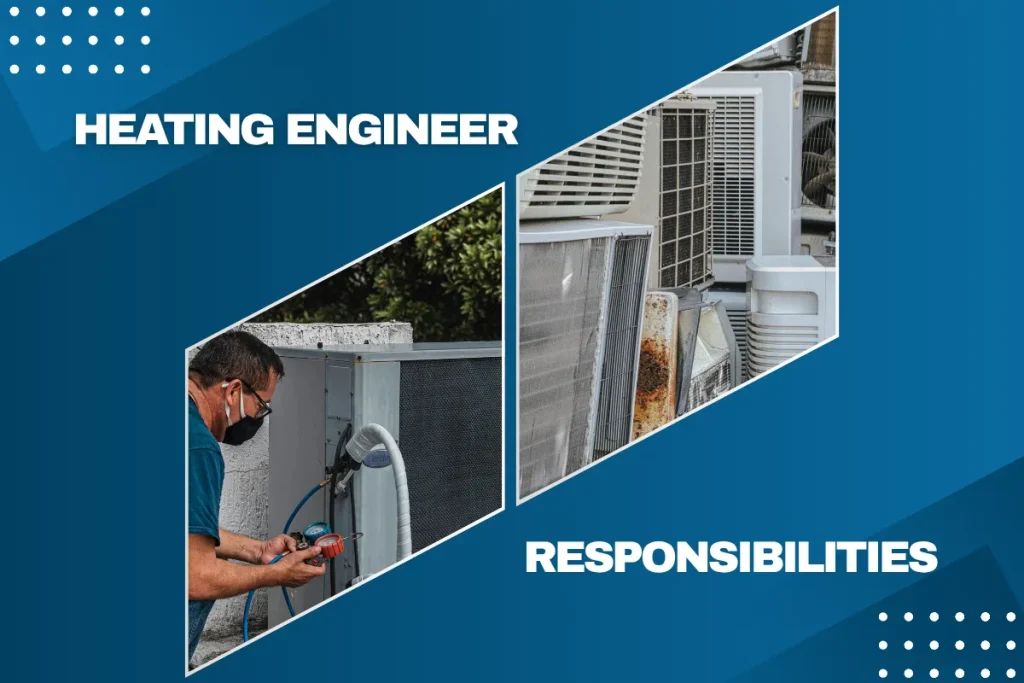
Imagine your boiler just gave up on the coldest morning of the year, or perhaps you’re lying awake listening to your radiators make that bizarre clanking noise. Who on earth would you rely on and suppose to call? Either way, you’ve probably come across the term ‘heating engineer’.
But what does a heating engineer do? They help keep homes and offices warm through our notoriously grey winters and chilly springs. When something goes horribly wrong with the property’s heating, calling them in is the only way.
Whether you’re a homeowner trying to figure out who to call, or considering a career as a heating engineer, this guide will help.
Today we’ll break down everything you want to know about a heating engineer (their job, required qualifications, skills, salaries, job opportunities, etc). Ready to discover? Let’s dive in.
What is a Heating Engineer?
A heating engineer is a trained, licensed trade professional who specialises in installing, maintaining, repairing, and servicing heating systems. We’re talking boilers, central heating systems, underfloor heating, heat pumps, radiators, and everything in between.
These are the people responsible for ensuring that the complex network of pipes, valves, pumps, and heat sources within your property operates safely and efficiently. They work across residential and commercial properties throughout the UK.
Heating engineering goes far beyond fixing things when they break. Heating engineers assess properties, recommend the most suitable systems for specific buildings, and ensure compliance with Part L of the Building Regulations.
Increasingly, they advise homeowners and landlords on low-carbon and renewable heating solutions.
What Does a Heating Engineer Do? A Complete Overview
Heating engineers’ job is quite a lot more than most people realise. The day-to-day work of a heating engineer is varied, technically demanding, and genuinely skilled. Here’s a thorough look at what fills their working hours.
◆ Boiler Installation and Replacement
Installing a new boiler is arguably the most common job a heating engineer will take on. It’s far more involved than simply swapping one unit for another. A heating engineer must assess the property’s size, insulation levels, hot water demands, and existing pipework before recommending the right boiler type.
Then comes the actual installation, which involves connecting the unit to the gas supply, flue, pipework, and controls, followed by rigorous testing and commissioning.
◆ Boiler Servicing and Annual Maintenance
Every boiler needs an annual service. This is where heating engineers spend a significant chunk of their time throughout the year.
During a service, the engineers will inspect and clean internal components, check for gas leaks, test pressure levels, and examine the flue and combustion. They also ensure the heat exchanger and burner are functioning correctly.
◆ Central Heating System Installation
Beyond boilers, heating engineers design and install complete central heating systems in new builds and older properties undergoing renovation. This includes calculating heat loss for each room, sizing and positioning radiators, laying pipework, and installing pumps and valves. They also fit thermostats and smart controls.
◆ Fault Diagnosis and Repairs
A heating engineer is the one who figures out faults in the heating system and the reason behind them. This diagnostic side of the job is where experience really counts.
A seasoned heating engineer can listen to a boiler, check a few readings, and pinpoint a failing pump or a faulty pressure sensor within minutes. Common heating repairs include replacing heat exchangers, fixing motorised valves, etc. It’s part detective work, part technical expertise.
◆ Heat Pump Installation and Servicing
Air source and ground source heat pumps are a heating engineer’s responsibility. Installing a heat pump requires specialist training and a solid understanding of refrigeration principles, electrical systems, and building heat loss calculations.
Heating engineers qualified in heat pump technology are currently among the most sought-after professionals in the sector.
◆ Gas Safety Checks and Certification
For heating engineers who hold Gas Safe registration (the legal requirement to work on gas appliances in the UK), conducting gas safety inspections is a core part of the role. These inspections cover all gas appliances in the property, checking for leaks, proper ventilation, flue integrity, and safe operation.
◆ Underfloor Heating Installation
Underfloor heating has surged in popularity over the last decade, and heating engineers are at the forefront of designing and installing these systems. Both wet systems (which circulate warm water through pipes beneath the floor) and electric systems fall within the heating engineer’s scope.
◆ Smart Heating Controls and System Upgrades
Installing and configuring smart thermostats like Nest, Hive, and Tado, and setting up multi-zone heating controls have become common for heating engineers. They also integrate heating systems with home automation platforms, advise on, and carry out system upgrades.
What Qualifications are Required to Become a Heating Engineer?
Becoming a heating engineer isn’t something you can do overnight. It requires genuine training, recognised qualifications, essential certifications, and formal registration with regulatory bodies.
Here are the qualifications that heating engineers require:
❐ Core Training and Vocal Qualifications
Most heating engineers enter the profession through a formal apprenticeship. It combines on-the-job training with classroom-based learning. Apprenticeships in plumbing and heating are offered at Level 2 and Level 3 Diplomas recognised by industry bodies like BPEC or City & Guilds.
- NVQ Level 2 Diploma: It covers the basic installations and maintenance tasks for domestic heating and plumbing.
- NVQ Level 3 Diploma: It covers advanced technical skills, system design, and unsupervised complex work.
- T Level: It provides the classroom knowledge before starting the practical training.
The formal apprenticeship typically takes 2-4 years to complete. Apprenticeships might ask for 4-5 GCSEs (A* -C or 9-4) including Maths, English, and Science.
❐ Work Portfolio and Essential Accreditions
- MLP(Managed Learning Programme: This is a fast-track accredited training for new entrants. MLP teaches practical and theoretical fundamentals of gas safety.
- On-site Work Portfolio: You must create an on-site work portfolio to prove competency before taking the final exams. Log supervised hours working alongside a registered engineer.
- Essential Certificates: To become a heating engineer, you must pass the ACS (Accredited Certification Scheme) exams. This includes the mandatory CCN1 (Core Domestic Gas Safety) certificate and CENWAT (Central Heating Boiler and Water Heaters) accreditation.
- Legal Registration: After passing the ACS exams, a heating engineer must legally register with the Gas Safe Register before carrying out any residential or industrial gas heating work.
❐ Additional/Specialist Qualifications
Beyond the core qualifications, heating engineers can significantly expand their scope and earning potential through specialist certifications. Significant specialist certifications are:
- MCS (Microgeneration Certification Scheme): Required for engineers installing renewable systems like heat pumps(both air-source and ground source), solar thermal, etc.
- WRAS (Water Regulations Certificate): Required for City & Guilds or BPEC Legionella Risk Assessment and Water Systems Disinfection.
- OFTEC registration: Covers oil-fired heating system tasks.
- Uninvented Hot Water Systems (G3): Required to install/service high-pressure water cylinders.
- LCL Awards: Install underfloor heating system.
Top Skills That a Heating Engineer Should Have
Formal qualifications are the entry ticket, but the heating engineers who truly excel in the UK market combine their technical training with a broader set of professional skills.
Here are the technical and soft skills that a heating engineer should have:
➤ Technical Skills
- System Installation and Maintenance: Proficiency in installing, repairing, and servicing heating appliances and systems.
- Diagnostic Ability: Identifying the root cause and troubleshooting.
- Mathematical and Analytical Thinking: Heat loss calculations, radiator sizing, boiler output matching, underfloor heating circuit design, etc.
- Renewable Technology Knowledge: Understanding heat pumps, solar thermal systems, and other greener solutions and their mechanisms.
- Electrical Knowledge: Understanding control wiring, including thermostats, programmers, S/Y plans, etc.
- Pipework Proficiency: Cutting, bending, and joining pipework (copper and plastic) for gas and water supplies.
➤ Soft Skills
- Problem Solving Ability: Staying calm and analytical even during unexpected repair issues.
- Attention to Details: Following instructions and carrying out precise measurements.
- Physical Stamina: To work in confined spaces, bend, kneel, or lift heavy items.
- Basic Administrative Knowledge: Skills in scheduling, invoicing, and managing compliance paperwork.
- IT Literacy: The ability to use digital devices like smartphones or laptops.
- Customer Service and Communication: Good interpersonal skills.
- Manual Dexterity: For handling small parts.
Heating Engineering Career: Salary & Job Options
UK heating engineers pursue several distinct career paths. Many work as directly employed engineers for large heating contractors, national housebuilders, social housing providers, etc.
Others work for regional heating specialists, taking on commercial and industrial contracts. A substantial number go self-employed and run their own little business. Salaries or incomes for each type of heating engineer vary based on experience, qualifications, location, and employment type.
Let’s look inside the salary averages and job options for heating engineers:
◆ Heating Engineers’ Salary Range
The average salary of a heating engineer in the UK is approximately £39,000 to £45,000 per year. Here’s the salary breakdown:
Salary Range by Experience
| Experience level | Salary Range |
| Apprentice/Starter | £18,400-£24,000 |
| Newly Qualified | £25,000-£30,000 |
| Employed & Experienced | £35,000-£47,000 |
| Sole Trader/Business Owner | £65000-£100,000+ |
Salary Range by Specialism
| Specialism Area/Role | Average Salary Range |
| Standard Gas Engineer | Around £41,000 |
| Dual-skilled Renewable Engineer | £48,000-£62,000 |
| Renewable System Designers | Up to £70,000 |
| Heat Pump Specialist | Approx. £7,000-£10,000 more than Standard Plumbers Per Year |
◆ Top Job Opportunities For Heating Engineers
The career of a heating engineer depends mostly on specialism in an area and personal preference. Here are the major career options:
| Career Role Type | Job Options |
| Technical Roles | Residential/Commercial Heating Engineer |
| Commercial Heating Engineer | |
| Residential/Commercial Gas Engineer | |
| Renewable Energy Engineer/Heat Pump Installer | |
| HVAC Technician | |
| Controls & Wiring Specialist | |
| Project Installer/Heating Installer | |
| Emergency Responder/Heating Maintenance Engineer | |
| Management/Commercial Roles | HVAC Design Engineer |
| Heating Installation Manager | |
| Technical Sales Manager | |
| Self-Employed Business Owner |
Bottom Line
For both homeowners and those who are dreaming of pursuing heating engineering as a career, knowing “what does a heating engineer do” is really essential.
As a homeowner, they’re the only trade you can rely on for your home’s heating system. Certified, multiskilled, and reliable. Most of them are Gas Safe-registered engineers. So they take care of gas appliances too.
As a career, Heating engineering is a profession worth taking seriously. It offers meaningful, skilled work, strong and growing earnings, and genuine long-term job security.
If a property’s heating is a garden, heating engineers are the gardeners. Without them, chilly winters wouldn’t feel this warm and cosy.
FAQs Regarding Heating Engineers and Their Roles
1. What is the Role of a Heating Engineer?
A heating engineer is liable for installing, repairing, and servicing heating systems like boilers, radiators, and underfloor heating in both residential and commercial properties.
2. Is a Plumber the Same as a Heating Engineer?
No, a plumber’s job isn’t the same as a heating engineer’s. Though their jobs overlap, a professional plumber basically focuses on water systems while a heating engineer works on heating systems.
3. Do Heating Engineers Fit Radiators?
Yes, qualified heating engineers frequently fit, replace, and move radiators as part of their expertise.
4. How Much Does a Heating Engineer Charge Per Hour?
In the UK, a heating engineer typically charges between £40 and £100 per hour.
5. What is the Day Rate for a Heating Engineer?
The average day rate for a heating engineer in the UK is between £220 and £350.
6. What is a Heating Engineer’s Salary?
A heating engineer’s salary in the UK is approximately £39,000 to £45,000 per year.