
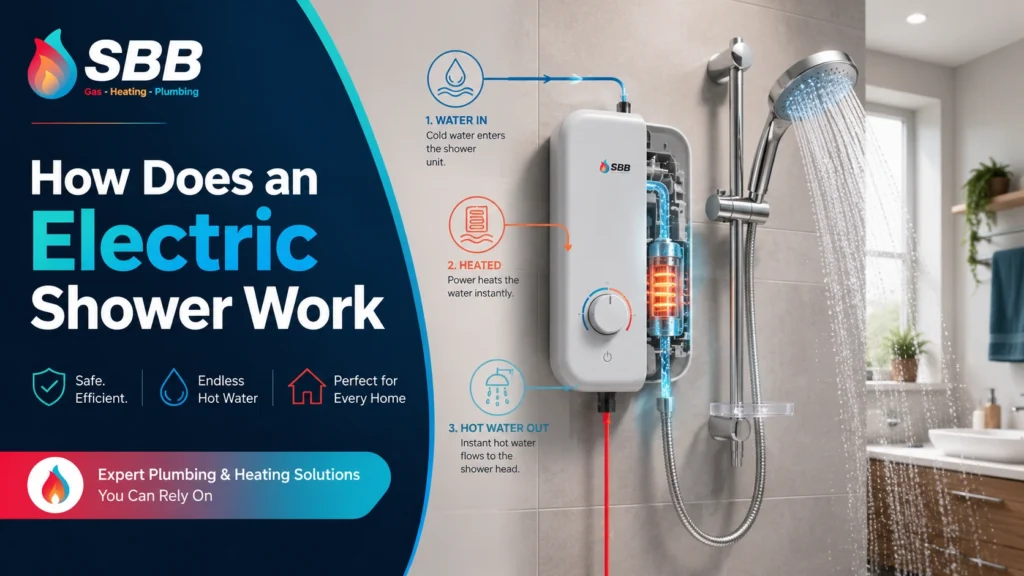
Imagine stepping into the shower on a cold winter morning, and someone has already used most of the hot water. Yet, within seconds of pressing the power button, warm water starts flowing. This occurs without any delay, hot water tanks, or stored reserves.
Wondering how? That’s because an electric shower creates hot water instantly as you use it.
Instead of mixing hot and cold water, it draws cold mains water into the unit and heats it instantly using a powerful electric element. It’s a clever system that delivers hot water on demand while operating independently from your home’s boiler.
But what actually happens inside the shower? How does an electric shower work? In this guide, we’ll explain how an electric shower works, how to use it, and its advantages and pitfalls. Everything you need to know is right here. Let’s dive in.
How Does an Electric Shower Work? A Complete Guide
At first glance, an electric shower looks simple. You turn the knob. Water comes out. Within seconds, it’s hot. Behind that simple process is a carefully designed system that combines plumbing, electrical engineering, safety controls, and temperature regulation.
But before we proceed to how it works, we must be familiar with its components. It’s like this: before you start walking, you must know which parts of your body are called legs. Let’s delve into an electric shower’s inside:
What are the Components of an Electric Shower?
Here are the core elements:
- Cold Water Inlet: Draws cold mains water into the unit.
- Inlet Filter: Removes dirt and debris to protect internal components and maintain water flow.
- Flow Valve and Flow Switch: Regulate water flow and ensure the heating element only activates when sufficient water is passing through.
- Heating Element: Converts electricity into heat, warming the water instantly.
- Heating Chamber: Houses the heating element and transfers heat efficiently to the flowing water.
- Temperature and Flow Controls: Adjust water temperature by increasing or decreasing the flow rate.
- Thermal Cut-Out: Automatically switches off the heating element if the unit overheats.
- Pressure Relief Device: Releases excess pressure caused by blockages or faults.
- Printed Circuit Board (PCB): Controls heating and monitors safety features in electronic models.
- Shower Hose and Head: Deliver the heated water in a controlled spray.
Let’s get into the real mechanism. Here’s how an electric shower works:
Step 1: Cold Mains Water Enters the Shower
Every electric shower starts with the cold mains water supply. Unlike a mixer shower, it has no connection to your home’s hot water system. There is no boiler or hot water cylinder involved.
When you press the start button, cold water enters the unit through the inlet connection and passes through a small filter. This filter traps grit, limescale particles, and debris that could damage internal components or reduce water flow.
The water then moves towards the heating chamber under mains pressure. Because the shower relies entirely on the incoming water supply, its strength depends largely on your property’s mains pressure.
Step 2: The Flow Switch Detects Water Movement
Before any heating begins, the shower checks that enough water is flowing. The flow switch does the job.
As water moves through the unit, it pushes a diaphragm or turbine mechanism inside the shower. Once the required flow rate is reached, the switch closes the electrical circuit. Only then is electricity allowed to reach the heating element.
If the water supply drops too low, the switch immediately cuts power. This prevents the heating element from running dry, which can cause rapid overheating or damage to the unit.
Step 3: Electricity Powers the Heating Element
Once the flow switch confirms safe operation, the heating process begins. Electricity flows to a high-resistance heating element housed inside a sealed heating chamber. The element is usually made from nickel-chromium alloy, a material chosen because it produces heat efficiently while withstanding extremely high temperatures.
As electric current passes through the element, electrical resistance converts electrical energy into heat. Meanwhile, cold water continuously flows around the element inside the heating chamber. Heat transfers directly into the moving water, raising its temperature within seconds. There is no storage tank and virtually no waiting time.
Step 4: Water Temperature Is Controlled by Flow Rate
Many people assume the shower changes the heating element’s temperature. But it doesn’t.
In most electric showers, the heating element operates at a fixed power output. Instead, the shower controls temperature by adjusting how quickly water passes over the element.
A slower flow gives the water more time to absorb heat, producing hotter water. A faster flow shortens the heating time, resulting in cooler water. This is why reducing the flow often makes the shower feel hotter. Many premium models also include electronic sensors and microprocessors that monitor incoming water temperature and flow.
Step 5: Thermal Safety Devices Monitor the System
Electric showers constantly monitor themselves while operating. The thermal cut-out measures the water temperature inside the heating chamber. If temperatures exceed safe limits, it immediately disconnects power to prevent overheating.
A pressure relief device (PRD) protects the shower if a blockage causes excessive pressure to build inside the unit.
Many modern showers also include over-temperature sensors and automatic shutdown systems that react within seconds if an internal fault is detected.
These features work continuously in the background, making electric showers safe despite combining high-power electricity with flowing water.
Step 6: Heated Water Reaches the Shower Head
After leaving the heating chamber, the hot water flows directly through the outlet, into the shower hose, and finally to the shower head. The entire journey takes only a few seconds.
The shower head then distributes the water through specially designed spray nozzles, creating an even flow while helping regulate water usage. Since the water is heated only when needed, there’s no stored hot water to run out.
Every shower starts with fresh cold mains water and heats it instantly, delivering a continuous supply of hot water as long as electricity and water remain available.
This video explains the core internal components of an electric shower, including the solenoid valve, flow control, pressure switch, and heating elements, and details how water and electricity interact to produce heat. It also provides guidance on identifying and troubleshooting common faults such as heating failures and flow issues.
Courtesy: The Shower Doctor
This video explains the internal mechanics of an electric shower, detailing how components like the solenoid valve, microswitches, and heating elements work together. It also covers essential safety features like the thermal cut-out and explains how flow control and water pressure regulate the water temperature.
Courtesy: cagmito76
How to Use an Electric Shower?
Using an electric shower isn’t just about turning a dial; there’s more to it. Every time you switch it on, the water flow, heating element, and safety controls work together in a precise order. Make sure it’s installed by a Part-P-certified plumber or an electrician. Plus, you must follow the correct operating order.
Following the correct operating sequence helps maintain a consistent temperature, improves efficiency, and protects the shower’s internal components. Let’s discover how to use an electric shower:
Step 1: Switch On the Electrical Isolator
Start by turning on the shower’s dedicated electrical isolator. This is usually a ceiling pull cord or a wall-mounted switch outside the shower area.
The isolator supplies power to the shower while allowing it to be safely disconnected when not in use. Without it switched on, the heating element cannot operate.
Step 2: Start the Shower
Press the start button or turn the control knob, depending on your shower model. Cold mains water immediately enters the unit.
As soon as the internal flow switch detects sufficient water movement, electricity is supplied to the heating element, and the water begins to heat instantly.
Step 3: Select the Power Setting
Most electric showers provide three power options. The higher the power setting, the greater the electrical output and the hotter the water. The power options are:
- Cold: No heating, ideal for hot weather.
- Eco or Medium: Uses less electricity while providing comfortably warm water.
- High: Delivers maximum heating for colder months.
Step 4: Adjust the Temperature
Fine-tune the temperature using the flow control. It adjusts how quickly water flows through the heating chamber.
A slower flow allows the water to absorb more heat, producing a hotter shower. A faster flow reduces heating time, resulting in cooler water. Make small adjustments and wait a few seconds after each one to allow the temperature to stabilise.
Step 5: Turn the Shower Off Correctly
When you’ve finished, press the stop button or switch the shower off. Many modern electric showers automatically continue running cold water for a few seconds. This cooling cycle removes residual heat from the heating element, helping prevent overheating.
Only switch off the electrical isolator after the shower has stopped completely. This allows the shutdown cycle to finish as designed.
Electric Showers for UK Homes: Pros & Cons
Electric showers offer incredible advantages, but they might not be a perfect fit for every household. Understanding both sides helps you decide whether they’re the right fit.
Here are the advantages and pitfalls of an electric shower:
Key Advantages:
- Hot Water on Demand: The shower heats water instantly. You never have to wait for a hot water cylinder to refill.
- Independent of the Boiler: Even if your boiler develops a fault, an electric shower can often continue providing hot water.
- Energy Efficient for Individual Showers: Only the water being used is heated. There’s no energy wasted heating an entire storage tank.
- Ideal for Smaller Homes: Flats, en-suites, and properties with limited hot water capacity often benefit from electric showers.
- Easier Installation in Some Properties: Because only a cold-water connection is required, plumbing work for an electric shower can be simpler.
Common Disadvantages:
- High Electrical Demand: Electric showers typically require between 7.5kW and 10.8kW. Plus, the installation must comply with UK electrical regulations.
- Flow Rate Can Be Lower: During winter, colder incoming mains water requires more heating. To achieve the desired temperature, the shower often reduces water flow.
- Dependent on Mains Water Pressure: Poor incoming water pressure usually leads to weaker shower performance. Electric showers cannot create pressure where none exists.
- Running Costs Can Be Higher: Electricity generally costs more per kilowatt-hour than gas. Frequent use may increase electricity bills, especially with high-power models.
Bottom Line
So, how does an electric shower work? You already know by now. To get the highest efficiency and comply with regulations, you must install it by hiring professionals like SBB Plumbing.
Honestly, electric showers are remarkably efficient pieces of engineering. Instead of storing hot water, they heat cold mains water instantly as it passes through powerful heating elements inside the unit. The process is fast, reliable, and surprisingly simple.
Understanding an electric shower’s functionality also explains why flow affects temperature, why these showers need dedicated electrical circuits, and why regular maintenance is important for long-term performance.
For many UK households, especially those with limited hot water capacity, an electric shower can be a real lifesaver with consistent performance all year round.
Top Questions About How an Electric Shower Functions
Where does the water come from for an electric shower?
An electric shower takes water directly from the cold mains supply. It does not use water from a hot water cylinder or boiler. Its unit heats the water internally while it flows through.
Does an electric shower heat the water itself?
Yes. An electric heating element inside the shower warms cold mains water instantly as it passes through the heating chamber and provides hot water on demand.
Do I need to turn hot water on for an electric shower?
No. Electric showers only require a cold water supply. The appliance heats the water itself, so there’s no need to turn on your home’s hot water system.
Do electric showers need special plumbing?
No. They only need a cold mains water connection, a dedicated electrical circuit with the correct cable size, circuit breaker, and RCD protection to operate safely.
What is the average lifespan of an electric shower?
A well-maintained electric shower typically lasts between 7 and 10 years. Lifespan depends on water quality, usage frequency, installation quality, and regular maintenance.
How much does it cost for a plumber to install an electric shower?
Labour to install an electric shower in the UK averages around £150–£400, and the shower unit (supply) costs £100–£300 depending on the model. Together, total installation typically costs around £350–£750.